Why Building a SOC Is No Longer Optional
Cyber attacks no longer announce themselves. They hide inside legitimate traffic, abuse trusted user accounts, and quietly move laterally across networks. This shift is exactly why building a Security Operations Centre (SOC) has become a business requirement rather than a technical luxury.
A SOC exists to provide continuous awareness of security threats and to respond before damage spreads. For many Australian organisations already relying on professional IT support, a SOC is what elevates basic IT management into a proactive defence strategy delivered through a modern managed IT services environment.
What a Security Operations Center Actually Does
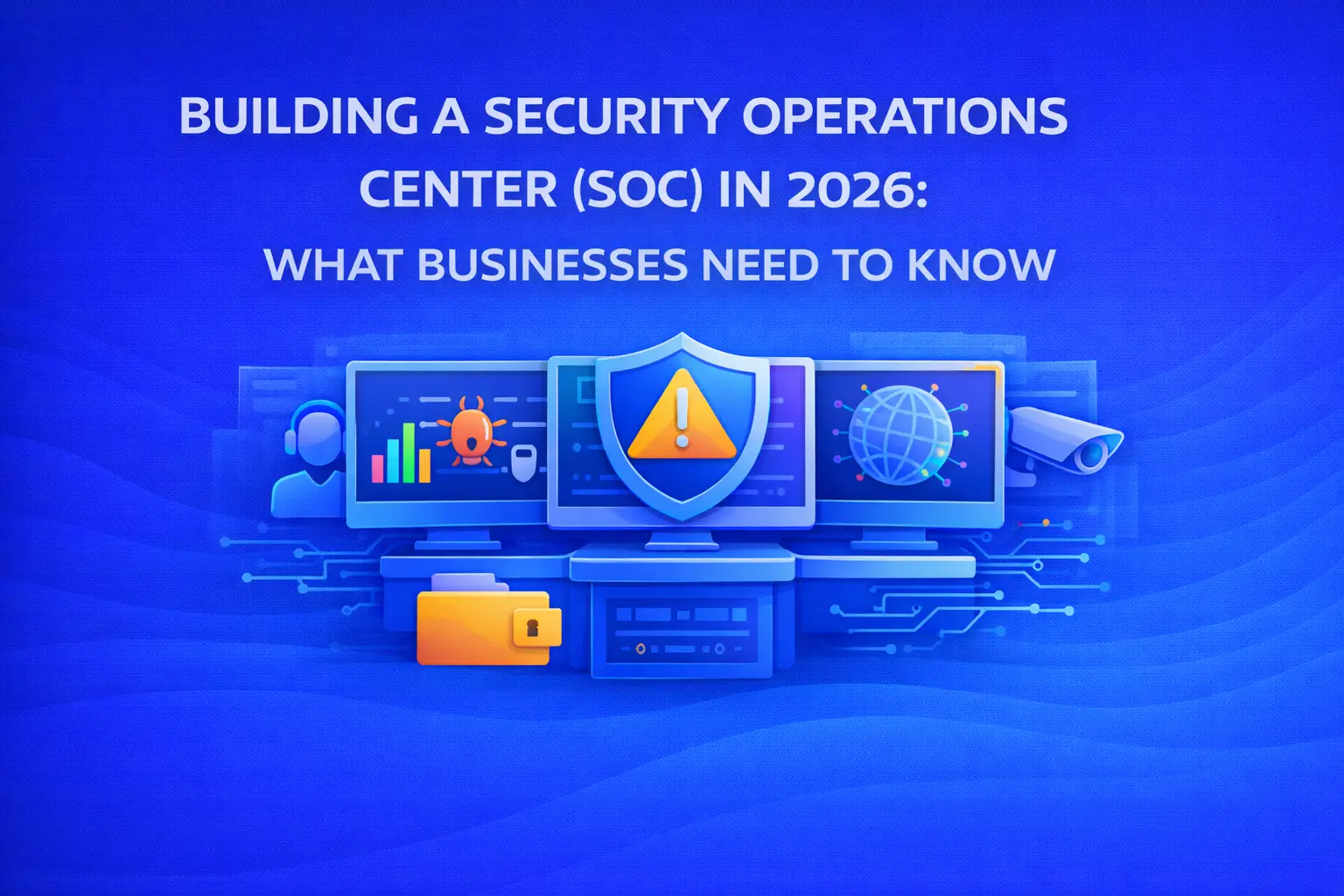
A Security Operations Center is a centralised function responsible for monitoring systems, networks, identities, and endpoints for signs of malicious activity. Instead of relying on isolated security tools, a SOC correlates signals across the entire IT environment to identify real threats early.
In practice, a SOC focuses on:
- Continuous monitoring of logs and telemetry
- Detecting suspicious or malicious behaviour
- Investigating alerts to validate threats
- Responding quickly to contain and remediate incidents
When delivered as part of managed cyber security services, a SOC becomes an always-on layer of protection rather than an emergency-only response.
Core Components of a Modern SOC
Centralised Security Visibility
A SOC aggregates data from endpoints, firewalls, cloud services, email platforms, and identity systems. This unified visibility allows analysts to identify subtle indicators of compromise that would otherwise go unnoticed.
Many organisations strengthen this visibility by pairing SOC monitoring with endpoint detection and response (EDR), enabling real-time insight into endpoint behaviour rather than relying on delayed alerts.
Behaviour-Based Threat Detection
Modern attacks often bypass signature-based tools. Instead, they exploit normal-looking behaviour such as abnormal login locations, privilege escalation, or unusual data transfers.
A SOC analyses behaviour over time, making it particularly effective against ransomware, credential theft, and insider threats that traditional defences struggle to detect.
Incident Response and Containment
Detection alone does not reduce risk. A SOC defines exactly how incidents are escalated, who takes action, and how damage is limited. This includes isolating affected devices, disabling compromised accounts, and coordinating recovery efforts.
These practices closely align with guidance from the NIST Cybersecurity Framework, which emphasises rapid detection and response as critical controls.
Build In-House or Use a Managed SOC?
In 2025, building a fully internal SOC is unrealistic for most organisations. Staffing 24/7 analysts, maintaining advanced tooling, and keeping pace with evolving threats requires significant investment.
As a result, many businesses choose a managed SOC model, delivered by an experienced provider and integrated with proactive online IT support. This approach provides continuous monitoring and expert oversight without overloading internal teams.
A managed SOC typically offers:
- 24/7 monitoring without internal staffing pressure
- Faster deployment and maturity
- Access to specialised security analysts
- Predictable operational costs
How a SOC Reduces Real Business Risk
The value of a SOC is measured by what doesn’t happen.
Common real-world outcomes include:
- Compromised user accounts detected before data exfiltration
- Malware isolated before spreading across the network
- Phishing attacks blocked before financial loss
According to the Australian Cyber Security Centre, early detection and rapid response dramatically reduce the cost and impact of cyber incidents. A SOC exists to compress response times from days to minutes.
Limitations and Realistic Expectations
A SOC is powerful, but it is not a silver bullet.
Important realities include:
- Poor system configuration leads to alert fatigue
- A SOC cannot compensate for unpatched infrastructure
- Technology alone cannot replace governance and policy
This is why a SOC is most effective when combined with foundational controls such as regular assessments and ongoing vulnerability scanning. Together, these layers turn detection into actionable risk reduction.
SOCs as a Long-Term Security Investment
Beyond immediate threat response, a SOC provides strategic value by:
- Identifying recurring security weaknesses
- Informing smarter security investments
- Supporting compliance and audit readiness
- Delivering measurable security metrics to leadership
Over time, this shifts cybersecurity from a reactive expense into a continuously improving operational capability.
FAQs: Building a Security Operations Center
What is the main purpose of a SOC?
The primary purpose of a SOC is to continuously monitor, detect, and respond to cybersecurity threats before they cause operational or financial damage.
Is a SOC only for large enterprises?
No. With managed SOC services, small and mid-sized businesses can access enterprise-grade security without building an internal team.
Do businesses need 24/7 SOC monitoring?
Yes. Cyber attacks occur outside business hours, and delayed response significantly increases breach impact.
How does a SOC differ from traditional IT support?
Traditional IT support focuses on uptime and troubleshooting, while a SOC focuses on threat detection, investigation, and incident response.
Can a SOC help with compliance?
Yes. SOC monitoring supports compliance by providing visibility, logging, and documented response processes required by many frameworks.