Cloud adoption has transformed how businesses operate. Platforms like Microsoft 365, Google Workspace, and Salesforce make collaboration easier, scale faster, and remove infrastructure headaches.
But many organisations assume something dangerous:
If the data is in the cloud, the provider secures everything.
That assumption is wrong.
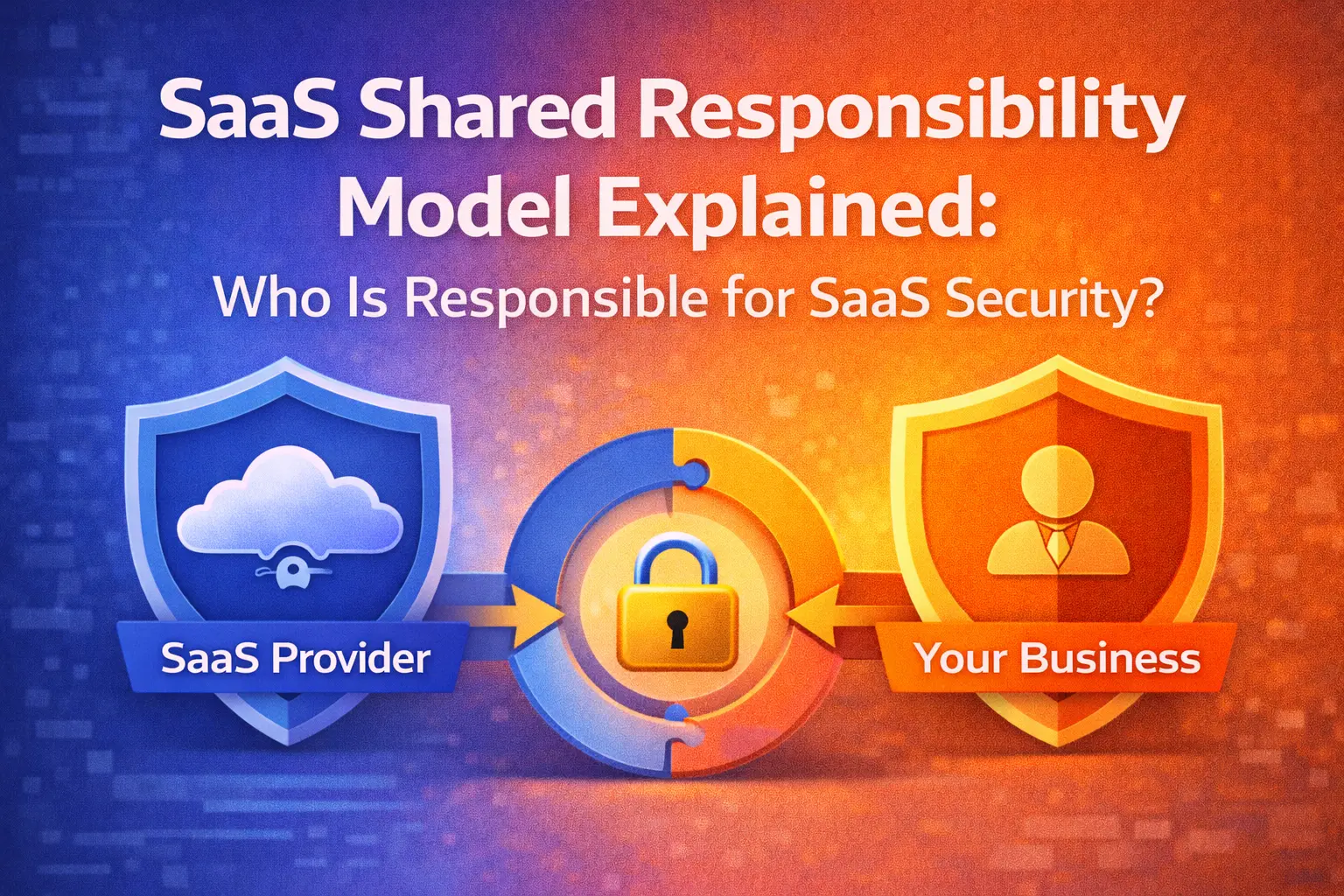
The reality is governed by the SaaS Shared Responsibility Model, a framework that clearly divides security responsibilities between the SaaS provider and the customer.
Understanding this model is critical for preventing data breaches, maintaining compliance, and protecting business-critical information.
What Is the SaaS Shared Responsibility Model?
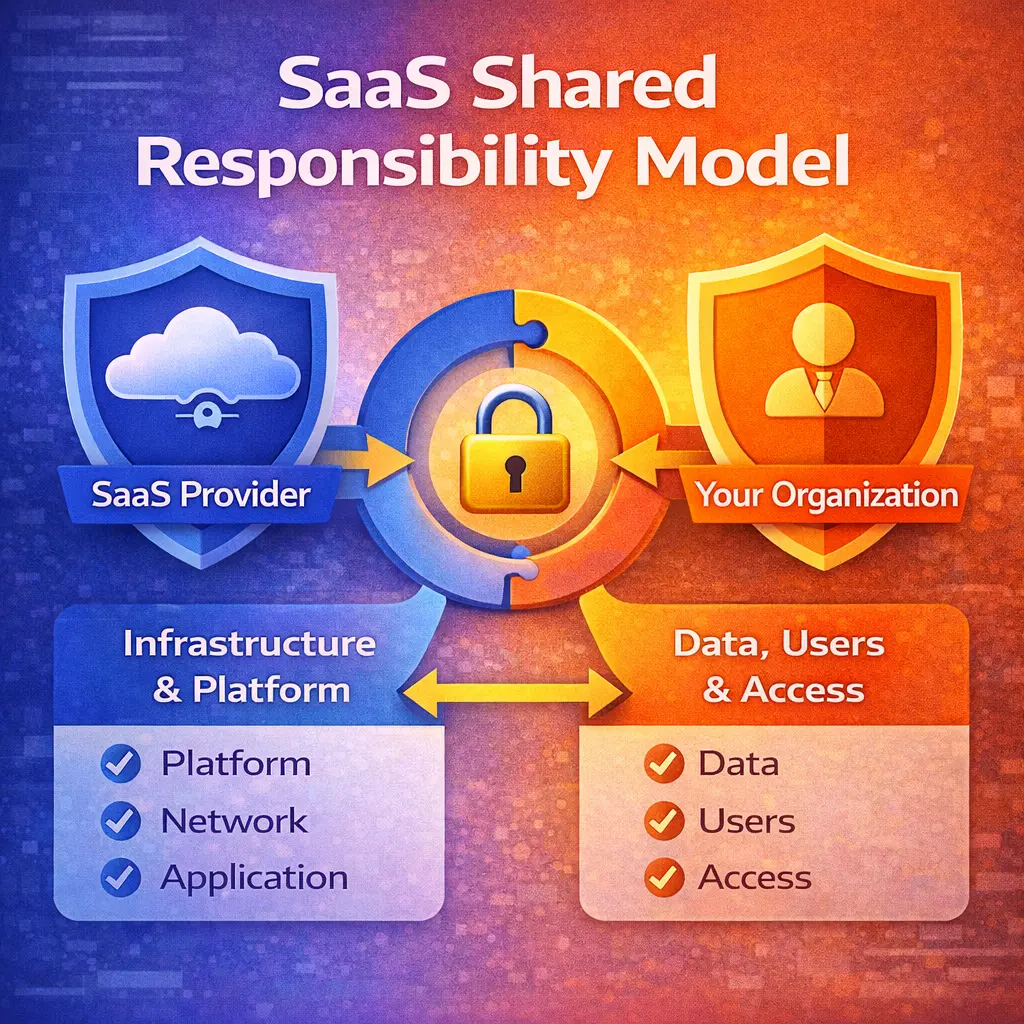
The SaaS shared responsibility model defines how security responsibilities are divided between a SaaS provider and the organisation using the platform.
In simple terms:
- The SaaS provider secures the infrastructure and platform
- The customer secures data, users, and access
This model exists because SaaS providers cannot control how businesses manage their own users, permissions, data sharing, or configurations.
For example:
A provider may secure the cloud servers, but they cannot prevent an employee from sharing confidential files externally or reusing a weak password.
This is why businesses must implement their own cloud security controls alongside the SaaS platform.
Why the Shared Responsibility Model Exists
Cloud platforms operate on multi-tenant infrastructure. Providers manage the core environment so customers do not need to maintain servers, operating systems, or physical data centres.
However, businesses still control:
- User accounts
- File access permissions
- Data storage policies
- Application integrations
- Security configurations
If an employee account is compromised or sensitive data is shared publicly, the responsibility falls on the organisation — not the provider.
This is one reason companies increasingly deploy additional security layers such as endpoint detection and response solutions to protect devices that access SaaS platforms.
What SaaS Providers Are Responsible For
SaaS vendors are responsible for securing the platform itself.
This typically includes:
- Data centre security
- Server infrastructure
- Network protection
- Platform availability
- Application updates and patches
Providers ensure the service runs reliably and remains protected against infrastructure-level attacks.
For example, Microsoft secures the underlying infrastructure of Microsoft 365. Google secures the infrastructure behind Google Workspace.
But the provider does not manage your employees, internal policies, or data-sharing behaviour.
What Businesses Are Responsible For
Customers using SaaS platforms are responsible for protecting how the platform is used.
This includes:
- User access management
- Identity and authentication controls
- Data protection policies
- Secure configuration settings
- Monitoring user activity
- Preventing data leakage
If an employee accidentally shares a confidential document externally or falls for a phishing attack, the SaaS provider cannot prevent it.
That responsibility sits with the organisation.
Businesses often strengthen this layer using dedicated SaaS protection services.These tools monitor SaaS platforms for suspicious behaviour and help prevent data exposure.
Real-World Example: Microsoft 365
Let’s look at a common SaaS platform.
In Microsoft 365:
Microsoft is responsible for:
- Data centre security
- Infrastructure uptime
- Platform updates
- Application availability
Your organisation is responsible for:
- Account security
- Multi-factor authentication
- Access control policies
- Data retention policies
- Backup and recovery
- Monitoring suspicious activity
If an attacker gains access to an employee account through phishing, Microsoft cannot prevent the breach unless the organisation has configured the correct security controls.
The Biggest Risk: Misunderstanding Responsibility
Many organisations assume that because their data is stored in the cloud, it is automatically protected.
In reality, most SaaS breaches occur due to:
- Weak passwords
- Phishing attacks
- Misconfigured permissions
- Excessive user privileges
- Lack of monitoring
According to research from IBM, human error remains one of the most common causes of data breaches.
You can review their research on breach causes here.
This highlights why the shared responsibility model exists in the first place.
Why SaaS Backup Is Still Necessary
Another misconception is that SaaS platforms automatically protect data against loss.
Most SaaS providers focus on service availability, not long-term backup.
Data loss can still occur due to:
- Accidental deletion
- Insider threats
- Ransomware
- Sync errors
- Malicious actions
That’s why many organisations implement dedicated cloud backup strategies to protect SaaS data.
If you’re exploring how SaaS data protection works in practice, our guide on SaaS backup and protection explains it further.
How Businesses Can Strengthen SaaS Security
To properly address the SaaS shared responsibility model, organisations should implement several security layers.
First, strengthen identity protection with strong password policies and multi-factor authentication.
Second, monitor SaaS platforms continuously for suspicious behaviour or abnormal access patterns.
Third, deploy endpoint security tools to protect the devices connecting to SaaS environments.
Fourth, implement secure backup and recovery systems to ensure critical data can be restored quickly.
Finally, educate employees about phishing and cybersecurity threats, since user behaviour remains the most common entry point for attackers.
These steps help close the security gaps left by misunderstanding the shared responsibility model.
Why SaaS Security Requires Continuous Monitoring
SaaS environments are dynamic.
New users join the organisation. Permissions change. Files are shared externally. Third-party applications integrate with cloud platforms.
Each change introduces potential risk.
Continuous monitoring helps detect:
- Suspicious logins
- Unusual file downloads
- Data exfiltration attempts
- Privilege escalation
- Policy violations
Without visibility, these threats can go unnoticed for months.
This is why modern cybersecurity strategies combine SaaS monitoring, endpoint security, and identity management into a layered defence model.
Final Thoughts
The SaaS shared responsibility model exists because cloud security cannot be handled by the provider alone.
SaaS vendors secure the platform.
Businesses must secure the data, users, and access.
Organisations that misunderstand this division of responsibility often discover the problem only after a breach occurs.
As businesses rely more on cloud platforms, understanding the shared responsibility model becomes essential for protecting data, maintaining compliance, and ensuring operational resilience.
If your organisation relies on SaaS applications and wants to strengthen its cloud security posture, explore our cybersecurity services or speak with our experts.
FAQs
What is the SaaS shared responsibility model?
The SaaS shared responsibility model defines how security responsibilities are divided between the SaaS provider and the customer. The provider secures the platform infrastructure, while the customer secures users, data, and access configurations.
Who is responsible for security in SaaS?
Both the provider and the customer share responsibility. The provider protects the cloud infrastructure and application platform, while the customer manages data protection, user access, and security configurations.
Does SaaS automatically protect your data?
No. SaaS platforms protect infrastructure and service availability, but businesses remain responsible for managing user security, data protection policies, and backup strategies.
Why is the shared responsibility model important?
It clarifies security responsibilities and prevents organisations from assuming the provider protects everything. Understanding this model helps businesses implement the right controls to prevent data breaches.
How can businesses secure their SaaS applications?
Businesses should implement identity protection, monitor SaaS activity, use endpoint security tools, enforce access controls, and maintain independent data backups.