If you’ve been quoted for a new business phone system lately, there’s a good chance the word trunk came up somewhere in the conversation, usually without much explanation attached. It sounds technical because the name comes from old telecom terminology, but the actual concept is fairly simple once someone walks you through it properly.
What a SIP trunk actually is
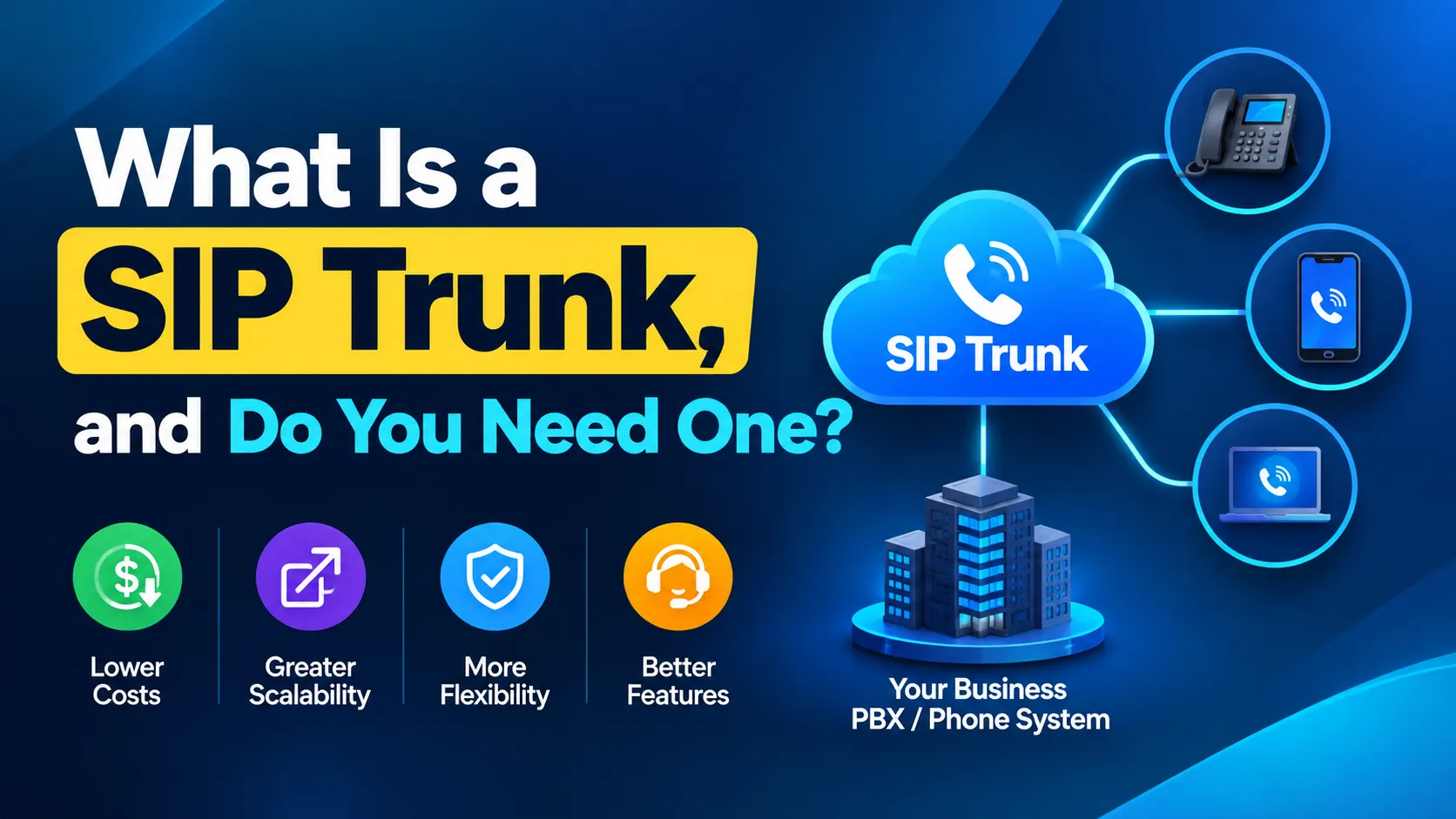
A SIP trunk is a virtual phone line that lets your business make and receive calls over the internet instead of a physical copper line. SIP stands for Session Initiation Protocol, which is just the technical method used to set up, manage and end a call over an internet connection. The word trunk comes from the old telephone industry, where it originally referred to a bundle of physical lines connecting one telephone exchange to another. A SIP trunk does the same job, just without any of the actual copper wiring.
Put plainly, it’s the internet based replacement for the old phone line running into your building.
How it actually works
Instead of a physical line carrying your calls, your phone system connects to a SIP trunking provider over your internet connection. That provider then routes your calls out to the regular phone network, and routes incoming calls back to your business the same way. Each SIP trunk can carry a number of simultaneous calls, referred to as channels, and unlike a physical line, adding more capacity is usually a matter of adjusting a plan rather than running new cabling.
Why this became relevant to almost every Australian business
For a long time, most businesses ran their phones over ISDN, a physical line technology that had been the backbone of business telephony for decades. Telstra formally exited ISDN services across Australia, with the network switched off nationally by the end of August 2022, and a short extension for satellite and wireless footprint areas after that. Anyone still relying on that old infrastructure has already had to move to something else, and SIP trunking has become the standard replacement.
That’s really why this term shows up so often now. It’s not a new or niche technology, it’s simply what most Australian businesses run their phones on today, whether they know the name for it or not.
SIP trunk, VoIP and hosted PBX are not quite the same thing
These three terms get used interchangeably a lot, and it causes genuine confusion when people are comparing quotes.
VoIP is the broad category, any phone call made over the internet rather than a traditional phone line.
A SIP trunk is a specific way of delivering that connectivity, usually to a business phone system or PBX that’s already in place, or being installed on site.
A hosted PBX takes it a step further and moves the entire phone system itself into the cloud, so there’s no physical PBX box sitting in your office at all.
A simple way to think about it, a SIP trunk gives you the internet based dial tone. A hosted PBX gives you the phone system it connects to as well. Businesses keeping their existing PBX hardware usually just need a SIP trunk. Businesses starting fresh often go straight to a fully hosted setup instead.
The genuine benefits, without the sales pitch
Cost is usually the first thing people notice, since SIP trunking calls typically cost less than traditional line rental, particularly for businesses making a high volume of calls.
Scalability matters more than people expect going in. Adding capacity for a busy period, or a new site, is usually a configuration change rather than a technician visit.
Redundancy is genuinely useful. If your office loses power or connectivity, calls can often be automatically redirected to mobiles or another location, something a physical line simply can’t do on its own.
What you actually need before switching
A business grade internet connection with enough bandwidth and, importantly, enough upload speed to handle your expected call volume without call quality dropping when the rest of the office is also online. If you’re not sure how much bandwidth your team actually needs day to day, our earlier guide on how much internet speed a business needs walks through that properly.
You’ll also need to check whether your existing PBX, if you’re keeping it, is compatible with SIP trunking, or whether it needs a small gateway device to bridge the two.
A real example of how this plays out
We worked with a small logistics business still running an old ISDN line well after the shutdown notices had gone out, mostly because nobody wanted to deal with moving their existing phone numbers. The numbers themselves were the actual sticking point, not the technology. Porting business numbers across to a new SIP trunk takes proper coordination with the losing provider, and rushing it risks losing numbers customers have called for years. We planned the port carefully, kept the existing PBX hardware in place to avoid a bigger hardware spend, and had them running on SIP trunking with zero missed calls during the switch. The lesson from that one wasn’t really about the technology at all, it was that number porting deserves as much planning as the technical setup, and it’s the part most businesses underestimate.
How to choose a SIP trunking provider
Ask how many channels are included and what it costs to add more later. Ask what happens to your calls if your internet connection drops, and whether failover to mobile is included or an extra cost. Ask how number porting is handled and how long it typically takes, since this is usually the part that catches businesses out, not the trunk itself.
Where this fits into your wider phone setup
SIP trunking is really just one piece of a bigger decision about how your business handles calls. If you’re weighing up SIP trunking against a fully hosted system, our guide on what VoIP technology actually involves is a good next read, and our page on hosted PBX covers the fully cloud based alternative in more detail.
We help Sydney businesses work out which setup actually fits, including handling number porting properly so nothing gets lost in the switch. If your business is still sitting on an old line, or you’re just not sure what setup you actually need, get in touch with our team and we’ll walk you through it, or have a look at our VoIP phone services for how we approach it.
FAQs
Is a SIP trunk the same as VoIP? Not exactly. VoIP is the general term for making calls over the internet. A SIP trunk is a specific way of delivering that connectivity, usually to an existing business phone system, rather than the whole system itself.
Do I need to replace my phone system to use SIP trunking? Often not. Many businesses keep their existing PBX hardware and connect it to a SIP trunk, sometimes with a small gateway device if the hardware is older. A full replacement is only needed if you’re moving to a fully hosted phone system instead.
Why is SIP trunking relevant now if it’s not new technology? Because the old ISDN network most Australian businesses relied on has been switched off. Telstra completed its national ISDN exit by the end of August 2022, which pushed most remaining businesses onto SIP trunking or a hosted alternative.
How many SIP channels does a small business need? It depends on how many calls happen at the same time, not your total staff count. A business where five or six calls might be happening simultaneously generally needs that many channels, with a little headroom for busy periods.
Can I keep my existing business phone number when switching to SIP trunking? Yes, in almost all cases, though number porting takes proper coordination with your current provider and can take several weeks. It’s worth starting that process early rather than leaving it until the last minute.
What happens to my calls if my internet connection goes down? With most SIP trunking setups, calls can be configured to automatically redirect to mobiles or another location during an outage, something a traditional physical phone line was never able to do.